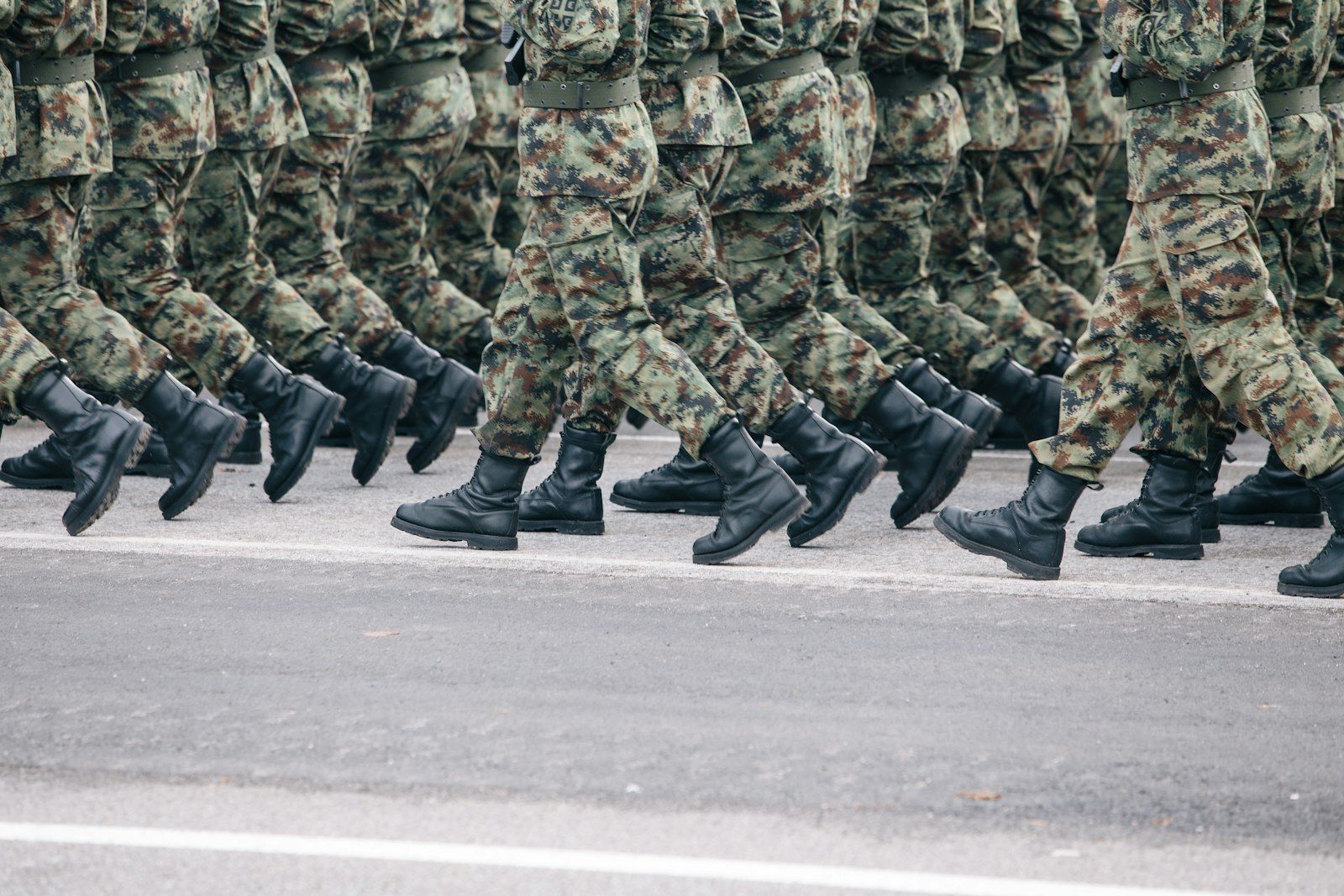
People are surprised when I tell them my time in the U.S. Army at the Missile Defense Agency prepared me better for trading than any course or book I ever bought. They expect the story to be about discipline. It's about something else.
The military teaches you to make decisions in the dark
Most people think decision-making improves with more information. The military teaches you the opposite. The information will never be complete. The time will never be enough. The cost of waiting is usually higher than the cost of acting on incomplete data.
You learn to define your decision framework in advance: what conditions trigger what action, what's your acceptable risk tolerance, what's your exit. Then when the moment comes, you don't deliberate, you execute.
This translates directly to trading. The setups are defined in advance. The risk is defined in advance. The exits are defined in advance. When the market gives you the trigger, you don't ask yourself whether to take the trade, you ask yourself whether it matches the framework.
Calm under pressure is a learned skill
Nobody is naturally calm with money on the line. Calm is the result of repetition. You drill the same scenarios enough times that the response becomes automatic, and your brain stops triggering the panic response that derails amateurs.
In the military, we drilled the same procedures hundreds of times for situations we hoped we'd never encounter. The point wasn't to memorize the procedure. It was to make the procedure feel routine so that when the real moment came, our nervous system didn't override our training.
The trader's equivalent is paper trading. Backtesting. Demo trading. Journaling. Trading small until the execution feels mechanical. Then scaling up.
The mission, not the day
In the military, you don't measure your performance by how today went. You measure it by whether the mission is on track. Today might have been a setback. The mission is still six weeks long.
Traders who survive long-term think the same way. They don't measure by daily P&L. They measure by quarterly adherence to plan. They have bad days. They have bad weeks. The mission is to be net profitable over a year, not to win today.
If you treat every trade like a mission, every day like a campaign, and every quarter like a deployment, your time horizon for performance review extends by a factor of ten. So does your patience.
Systems beat individuals
The military doesn't run on heroes. It runs on systems. The system is designed so that competent operators following the procedure produce reliable outcomes, without depending on any individual being exceptional that day.
Trading should work the same way. Your edge is a system. The system produces results when followed by a disciplined operator who's having a normal day. If your system requires you to be especially smart, focused, or lucky to work, it's not a system, it's a bet on yourself.
After-action reviews
After every operation, the military runs an after-action review. What was supposed to happen. What actually happened. What was the gap. What do we change next time.
This is identical to a weekly trade journal review. Pull up every trade from the week. Compare planned to actual. Identify the gap. Document one specific adjustment for next week. Repeat.
Most traders skip this step. They look at the P&L, feel something, and move on. The serious ones run a structured after-action every week, every month, every quarter. That's where the compounding happens.
What I tell new traders
Treat trading like a tour of duty. You're not in the markets for a quick win. You're in the markets for a multi-year deployment. You'll have hot streaks and cold streaks. You'll have weeks where everything works and weeks where nothing does. Your job is to execute the system day after day until the math has time to play out.
That's the mindset that translates from the Missile Defense Agency to the trading floor. The discipline shows up the same way. So does the patience. So does the willingness to do the boring work that makes the impressive results possible.